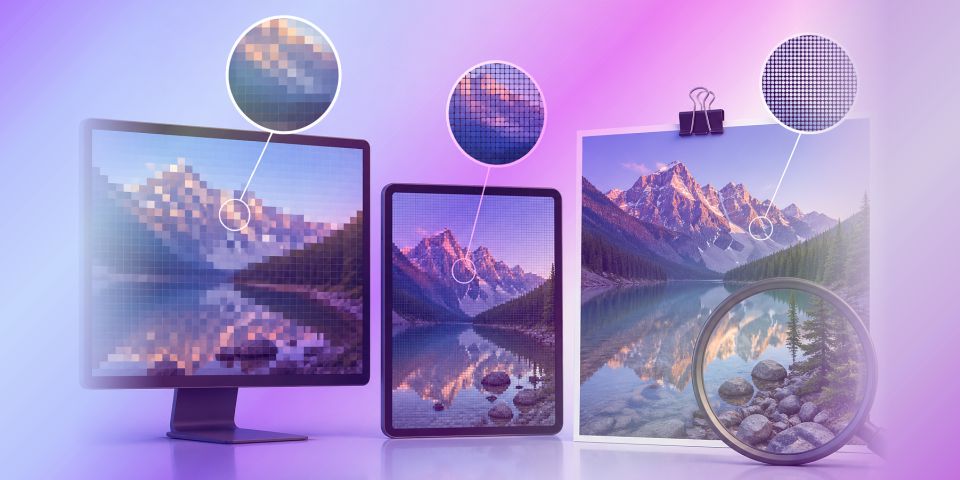
PPI (Pixels Per Inch) measures the number of pixels that appear within one inch of a digital display or image. It describes the pixel density of a screen or image and helps determine how sharp, clear, and detailed the visuals look.
A higher PPI means more pixels fit into a single inch, which creates smoother edges, sharper text, and more detailed images. A lower PPI results in visible pixels and reduced image quality.
Designers, photographers, and web developers often use PPI to evaluate screen resolution and image clarity. Smartphones, computer monitors, tablets, and televisions all rely on PPI to display digital content accurately.
For example, a smartphone with a PPI of 450 will usually display much sharper graphics than a monitor with a PPI of 100.
Why Is PPI Important?
PPI plays an important role in digital design and viewing experiences. It affects how images, videos, text, and graphics appear on a screen.
High PPI displays provide:
- Sharper images
- Clearer text
- Better detail
- Improved viewing quality
- Smoother graphics
Low PPI displays may cause images to look blurry or pixelated, especially when viewed up close.
Modern devices often use high-resolution screens with high PPI values to improve user experience. This is especially important for graphic design, gaming, photography, and mobile devices.
PPI vs DPI: What Is the Difference?
Many people confuse PPI with DPI (Dots Per Inch), but the terms have different meanings.
PPI
PPI refers to digital images and screen displays. It measures how many pixels fit into one inch of a screen or image.
DPI
DPI refers to printing. It measures how many printed dots a printer places within one inch of paper.
In simple terms:
- PPI affects digital image quality
- DPI affects printed image quality
Although people sometimes use the terms interchangeably, they serve different purposes.
Best Uses for High PPI Displays
High PPI screens work best for tasks that require detail and accuracy, including:
- Graphic design
- Photo editing
- Video editing
- Reading text
- Gaming
- Mobile app design
Professionals in creative industries often prefer displays with high pixel density because they deliver more precise visuals.
Conclusion
PPI (Pixels Per Inch) measures the pixel density of a digital display or image. It directly affects image sharpness, clarity, and overall visual quality. Higher PPI values create more detailed and smoother visuals, while lower PPI values can make images appear blurry or pixelated.
Understanding PPI helps consumers choose better screens and allows designers to create high-quality digital content. Whether you use a smartphone, monitor, or tablet, PPI plays a major role in how clear your screen looks.