
Dot gain is a common printing issue that causes printed images, colours, and text to appear darker than expected. It happens when halftone dots increase in size during the pre-press or printing process. Because the dots become larger, more ink covers the paper surface, resulting in darker tones and reduced detail in the final printed piece.
In commercial printing, photographs and graphics are reproduced using tiny halftone dots rather than continuous tones. These dots are carefully sized to create the illusion of gradients and shading. During production, however, the dots can spread slightly because of ink behaviour, paper absorbency, press pressure, and other mechanical factors. This increase in dot size changes the appearance of the printed image and can affect colour accuracy and sharpness
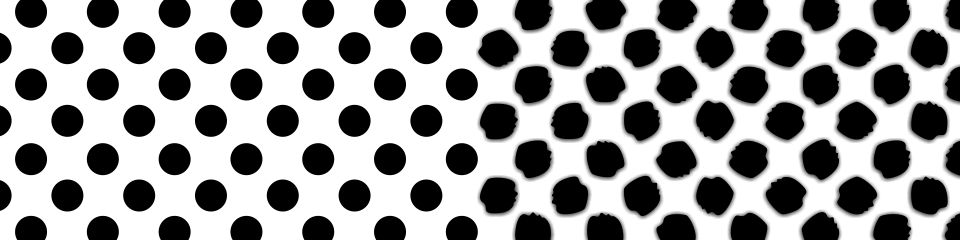
Several elements influence how much tonal spread occurs in a print job. Paper type plays a major role. Uncoated and absorbent papers, such as newspaper stock, tend to absorb more ink, which causes the printed dots to spread further. Coated papers usually produce sharper results because the ink stays closer to the surface. Printing speed, ink density, plate quality, blanket pressure, and screen ruling can also affect the final outcome.
This effect is a normal part of the printing process and cannot be removed entirely. Instead, printers and pre-press technicians work to control it through calibration, colour management, and careful press setup. Modern workflows often include compensation methods that adjust artwork and tonal values before printing so the finished result appears more accurate.
Designers should also understand how tonal expansion affects print production. Fine details, shadow areas, and subtle gradients may reproduce differently on paper than they appear on screen. By preparing artwork correctly and working within recommended print specifications, designers can help maintain image clarity and consistent colour reproduction.
Read more on Preparing Artwork for Print.
Understanding dot behaviour is essential in professional print production because it improves predictability and helps achieve better print quality across different printing methods and paper stocks. Careful management during pre-press and printing ensures more reliable and visually consistent results.