

Search engine optimisation (SEO) helps your website appear in search engine results when people search for products, services, or information online. Good SEO improves your visibility, increases website traffic, and helps potential customers find your business more easily.
Many business owners assume SEO requires technical expertise or expensive consultants. While advanced SEO can become complex, you can still improve your rankings by applying a few simple SEO basics yourself.
This guide explains how search engines work and shares practical SEO tips beginners can implement immediately.
How Search Engines Work
Search engines do not view websites the same way people do. Visitors may notice your design, animations, colours, and images, but search engines focus mainly on text and structure to understand your content.
To deliver accurate search results, search engines complete several important tasks:
- Crawling
- Indexing
- Processing
- Calculating relevance
- Retrieving results
Crawling
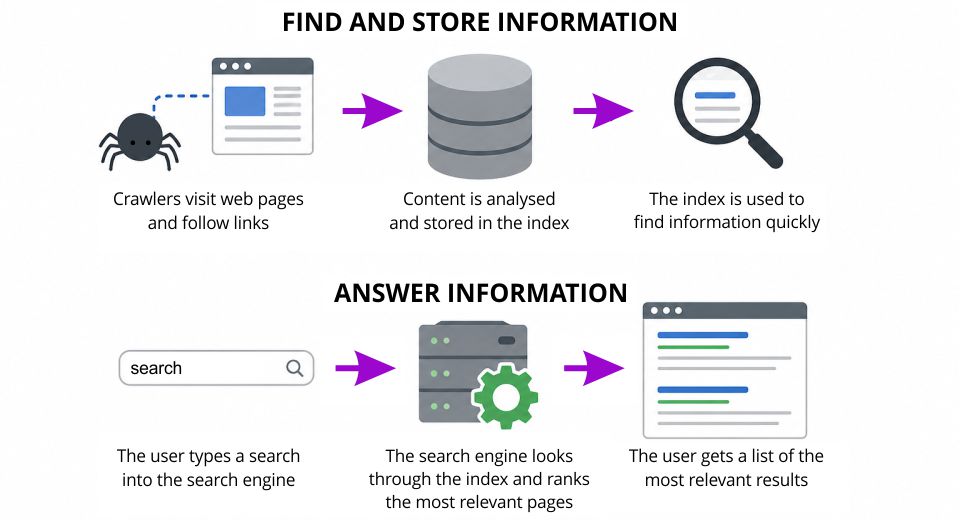
Search engines use software called crawlers or spiders to scan websites across the internet. These crawlers follow links from page to page and collect information about website content.
Because billions of web pages exist online, search engines may not crawl your website immediately. In some cases, it can take weeks before a crawler revisits your site.
Indexing
After crawling a page, the search engine stores the information in its index. During this stage, the search engine analyses your content and identifies the keywords and topics that describe the page.
If your content lacks structure or clarity, search engines may struggle to understand it correctly. Well-optimised content improves your chances of ranking for the right search terms.
Processing Search Queries
When someone performs a search, the search engine compares the query with pages stored in its index. It then analyses millions of pages to find the most relevant results.
Relevance and Ranking
Search engines use algorithms to determine which pages should rank highest. These algorithms consider factors such as:
- Keyword usage
- Content quality
- Website speed
- Links between pages
- Meta tags
- Mobile usability
Google regularly updates its algorithms, so keeping your website updated remains essential for long-term SEO success.
Retrieving Results
Finally, the search engine displays results in order of relevance and quality. Websites with strong SEO usually appear higher in search rankings.
SEO Basics You Can Do Yourself
Good SEO starts with understanding your audience and creating valuable content that answers their questions.
Focus on these essential SEO areas:
- Keyword research
- Quality content creation
- Technical SEO
- Image optimisation
- Fresh content updates
Keyword Research for SEO
Keywords are the words and phrases people type into search engines. Choosing the right keywords helps search engines connect your content with the right audience.
For example, a user may target phrases like:
- SEO basics for beginners
- Website SEO tips
- Improve Google rankings
- WordPress SEO guide
Use keywords naturally throughout your content. Include them in:
- Headings
- URLs
- Meta descriptions
- Image file names
- Introductory paragraphs
Avoid overusing keywords. Keyword stuffing can damage your rankings and reduce readability.
Create High-Quality Content
Search engines favour helpful, informative, and original content.
When writing blog posts or website pages:
- Answer common customer questions
- Write clearly and simply
- Break content into sections with headings
- Use short paragraphs
- Add internal links to related content
- Keep content relevant to your audience
Quality content improves user experience and encourages visitors to stay longer on your website.
Read more on creating effective content.
Keep Your Content Fresh
Updating your website regularly signals to Google that your site remains active and relevant.
You can keep your content fresh by:
- Publishing new blog posts
- Updating outdated articles
- Improving old pages with new information
- Adding updated images and examples
Fresh content helps search engines discover and index your site more often.
Technical SEO Basics
Technical SEO helps search engines crawl and understand your website more effectively.
Important technical SEO factors include:
- Fast page loading speeds
- Mobile-friendly design
- Secure HTTPS connections
- Clean website structure
- Optimised URLs
If you use WordPress, plugins like Yoast SEO can simplify many technical SEO tasks.
Image SEO Tips
Images improve the appearance of your website and can also support your SEO strategy.
Follow these image SEO best practices:
- Use original images whenever possible
- Choose images that relate to your topic
- Rename image files with descriptive keywords
- Compress large image files
- Use appropriate formats such as JPEG or PNG
- Add descriptive alt text to every image
Optimised images improve accessibility, page speed, and search visibility.
Why SEO Matters
SEO helps businesses attract organic traffic without relying entirely on paid advertising. Even small SEO improvements can increase your website visibility and generate more enquiries over time.
The best SEO strategy focuses on creating useful content for real people while making your website easy for search engines to understand.
Final Thoughts
SEO may seem overwhelming at first, but learning the basics can make a significant difference to your website performance.
Start with keyword research, create useful content, optimise your images, and keep your website updated regularly. Over time, these improvements can help you rank higher in search results and attract more visitors.
If you need help improving your website SEO, feel free to contact me for advice and support.

Cimeron Collins
Cimeron is an artist and designer based in Edenvale, South Africa, with over 30 years of experience in the printing and publishing industries.
He’s also an avid WordPress enthusiast who strives to stay up to date with the latest trends in web design and development, constantly exploring new technologies and refining his skills.

Leave a Reply